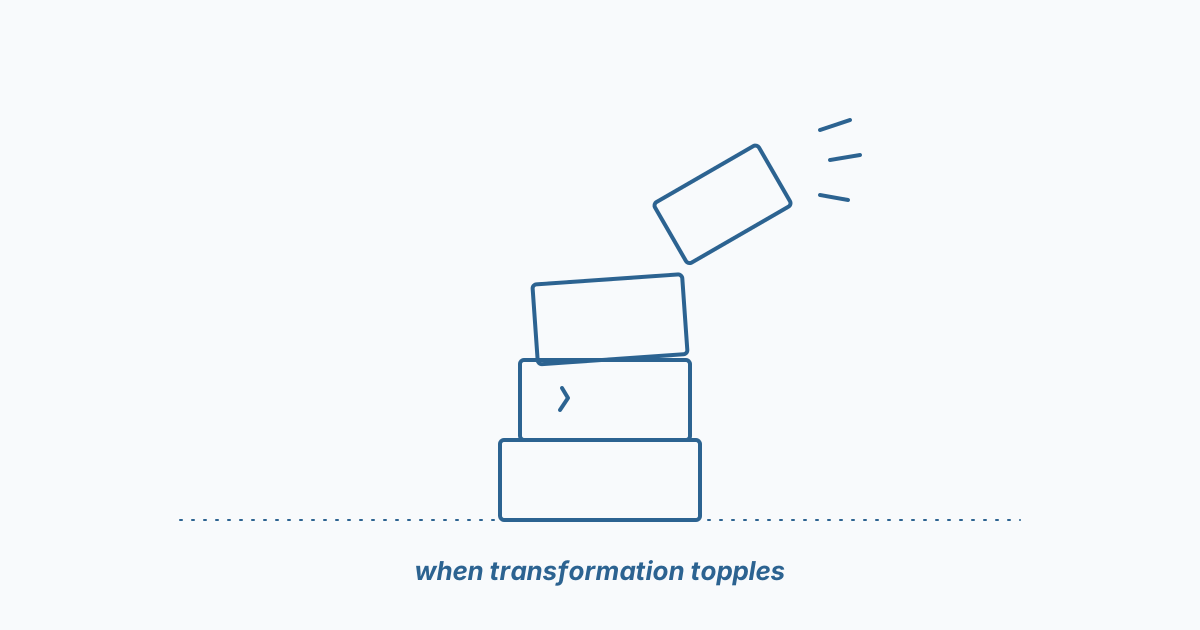
"Digital transformation" has become a label so broad it stops being useful. A SaaS migration is transformation. A new mobile app is transformation. A five-year, multi-vendor rebuild of every internal system is also, apparently, transformation. The problem is that the third one almost never works — and most companies don't realise they're scoping that version until they're already in it.
The pattern of failure
Across the engagements we've seen go sideways, three things show up again and again:
- The scope keeps growing. Every stakeholder adds "just one more" system to the migration. By month four, the program is six times the original size.
- No single owner. Someone signed the contract. Nobody owns the outcome. Decisions stall in committee.
- The "before" state was never measured. When the new system eventually ships, nobody can prove it's actually better.
What works instead
- Pick one painful workflow, not a whole department. Replace the worst single thing first. Ship it. Then decide what's next.
- Baseline the metrics before you start. Time-to-quote, support tickets, cycle time — whatever the new system is supposed to improve, measure it now.
- Give one person budget authority. Steering committees are where velocity goes to die.
- Set a 90-day milestone. If nothing is live in 90 days, the program is the wrong shape.
Transformation that ships looks small from the outside. That's because it is. The companies getting real leverage from this work aren't the ones with the longest roadmaps — they're the ones who got one thing into production and built confidence from there.